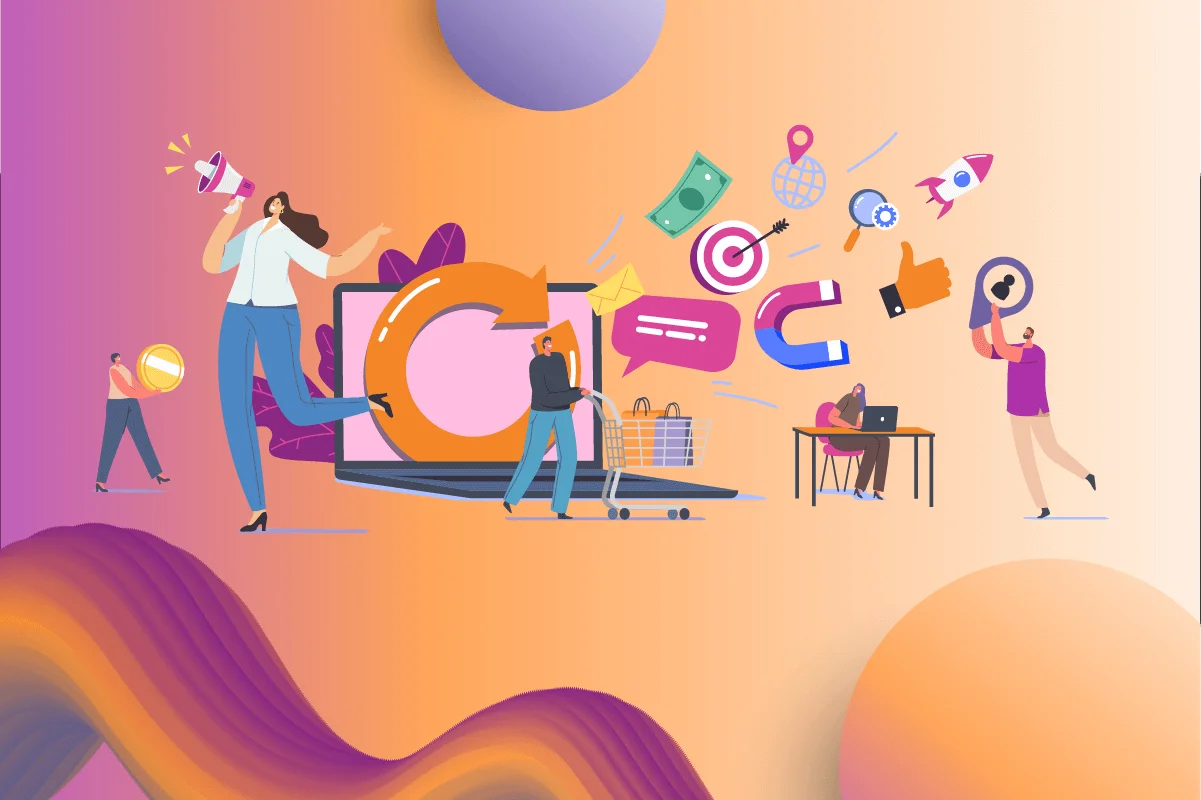
Implementing a 360 marketing campaign is essential when you want to maximize your brand's impact through coherence and strategic repetition. This involves using a mix of channels adapted to current consumer behavior, ensuring that your message reaches the customer at every stage of the sales funnel, from awareness to final conversion.
Unlike a fragmented approach, where each marketing channel operates independently, a 360 strategy orchestrates all efforts around a single central message. The result? A unified brand experience that builds trust and accelerates the purchasing decision. In this comprehensive guide, we explore what a 360 campaign truly means, why it is vital for growth, and how you can plan and execute it step by step.
A 360 marketing campaign represents an integrated communication strategy that delivers a unified and coherent message through all user touchpoints. This involves harmonizing online channels, such as social media, SEO, and PPC, with offline media, ensuring a fluid and memorable brand experience throughout the acquisition process.
Why is a 360 approach vital in marketing?
In a saturated market, where consumer attention is the most valuable resource, relying on a single marketing channel is a recipe for stagnation. A holistic strategy is not a luxury, but a strategic necessity. Dependency on a single channel (for example, only Meta Ads) makes you vulnerable to algorithm changes, rising costs, or audience behavior shifts. A 360 approach diversifies risk and maximizes opportunities.
The main benefits of an integrated campaign are:
- Coherence and Consistency: Your brand message is the same, whether a customer sees it on a billboard, in an Instagram story, in a blog article, or in an email. This repetition builds brand recognition and trust.
- Maximum Audience Reach: A 360 strategy ensures you are present where your audience is, at all decision-making stages. Some customers discover brands on TikTok, others search for solutions on Google, and others are convinced by a well-targeted email. The 360 approach covers them all.
- Synergy Effect: Channels work together, amplifying each other's effects. A TV campaign can generate a massive increase in brand searches on Google (SEO & PPC). An influencer marketing campaign can fuel content for social media and ads (UGC). 1+1=3.
- Smart Budget Optimization: An overview allows you to allocate your budget where it generates the greatest impact. You can identify which channels drive awareness and which channels convert, adjusting investments in real time for maximum ROI.
- Increasing LTV (Customer Lifetime Value): A 360 experience does not stop at the first purchase. Through CRM, email marketing, and community management, the strategy continues to strengthen the relationship with the customer, encouraging loyalty and repeat purchases.
When is the right time to implement a 360 campaign?
While a holistic marketing strategy should be a constant goal, certain business moments necessitate the implementation of a high-impact 360 campaign. Ignoring these opportunities can mean a failed launch or prolonged stagnation. Here are the clearest scenarios:
- Launching a new product or service: This is the most classic example. To generate rapid awareness and sales, you need maximum visibility on all fronts. You need to educate the market, spark curiosity, and facilitate acquisition, actions that require a complex mix of channels.
- Entering a new market or launching a business: When starting from scratch, whether with a new brand or in a new geographical region, you need to quickly build trust and visibility. A 360 campaign helps you compensate for the lack of history. If you're thinking about the first steps, a guide on how to start 6 steps for your first online business! can provide a clear structure.
- Rebranding or strategic repositioning: If you change your visual identity, brand message, or target audience, you need to communicate this change clearly and unequivocally. A 360 campaign ensures that the old perception is quickly replaced by the new one in consumers' minds, avoiding confusion.
- Major seasonal campaigns: Events such as Black Friday, Christmas, or "back to school" campaigns are moments of maximum competitiveness. To be heard above the competitor noise, you need an overwhelming, coordinated presence across multiple channels.
- Aggressive growth objectives: When sales targets exceed organic growth and the capacity of a single channel, a 360 campaign is the only method by which you can achieve the desired scaling. This allows for unlocking new audience segments and accelerating the entire sales funnel.
- Revitalizing a stagnant product: If a product with potential is not performing as expected, a 360 campaign can be the shock it needs. A new creative approach, communicated through fresh channels, can change perception and relaunch sales.
How do you implement a 360 marketing campaign?
A successful campaign does not just mean being everywhere, but being present with a purpose. The implementation process is methodical, starting with strategy and ending with data analysis. Let's go through the key steps.
Step 1: Strategic foundation - audience, message, objectives
Any solid campaign begins with answers to fundamental questions. Before choosing channels, you need to know WHO you are addressing, WHAT you want to say, and WHY you are making this effort. Define your customer avatar (Buyer Persona) in detail: demographic data, online behavior, needs, fears, and the platforms where they spend their time.
Next, establish the main objective of the campaign using the SMART model (Specific, Measurable, Achievable, Relevant, Time-bound). A vague objective like "increasing sales" is useless. A SMART objective is: "Increase sales for product X by 30% in Q3 by attracting the 25-35 year old audience segment." Finally, crystallize the central message of the campaign, the unique, simple, and memorable idea you want to convey across all channels.
Step 2: Channel selection and integration
This is where the magic happens. Based on your audience and objectives, you select the appropriate channel mix. A 360 campaign does not necessarily mean using *all* existing channels, but rather those most relevant to your audience. These are divided into several categories, each with its specific role in the ecosystem.
Their integration is crucial. For example, blog content (Content Marketing) is promoted through Facebook ads and sent to subscribers via Email Marketing. Traffic reaches the website, which is SEO optimized to convert. Campaign success is then amplified through Influencer Marketing, and existing customers are retained through CRM.
Step 3: Asset creation and coherent execution
At this stage, the strategy comes to life. The creative team develops all necessary materials: visuals (banners, videos, images), texts (ad copy, articles, emails, scripts), landing pages, and any other communication element. The main challenge is maintaining coherence. The color palette, fonts, tone of voice, and most importantly, the central message must be identical or natively adapted to each platform, but perfectly aligned.
A detailed campaign calendar is mandatory. This must specify what content is published, on which channel, and on what date. Coordination is key to avoiding cannibalization of efforts or transmitting contradictory messages. For example, you do not want to announce an offer by email before the dedicated landing page is functional.
Step 4: Measurement, analysis, and continuous optimization
A 360 marketing campaign is not a "set it and forget it" project. It is a living organism that requires constant monitoring and adjustment. Defining the correct KPIs (Key Performance Indicators) for each channel and for the campaign as a whole is essential. These may include: Cost per Lead (CPL), Return on Ad Spend (ROAS), Customer Acquisition Cost (CAC), conversion rate, engagement rate, or organic traffic growth.
Use a centralized dashboard (e.g., Google Analytics 4, Looker Studio, Hubspot) to aggregate data from all channels. Analyzing this data will show you what works and what does not. You might discover that TikTok generates massive awareness at a low cost, while Google Ads is the most efficient channel for final conversions. Based on this information, you can reallocate the budget in real time to maximize the overall performance of the campaign.
Frequently Asked Questions (FAQ)
Next steps: from plan to action
A 360 marketing campaign, executed correctly, can be the most powerful growth engine for your business. It transforms disparate marketing efforts into a well-oiled machine that works synergistically to achieve ambitious goals. The key to success lies in meticulous planning, consistent execution, and data-driven optimization.
Implementing such a strategy can seem overwhelming, especially when internal resources are limited. Collaborating with a digital marketing agency experienced in integrated strategies can make all the difference. A team of specialists can bring to the table the necessary expertise for each channel, the overall vision to orchestrate them, and the right tools to correctly measure success, allowing you to focus on business development.