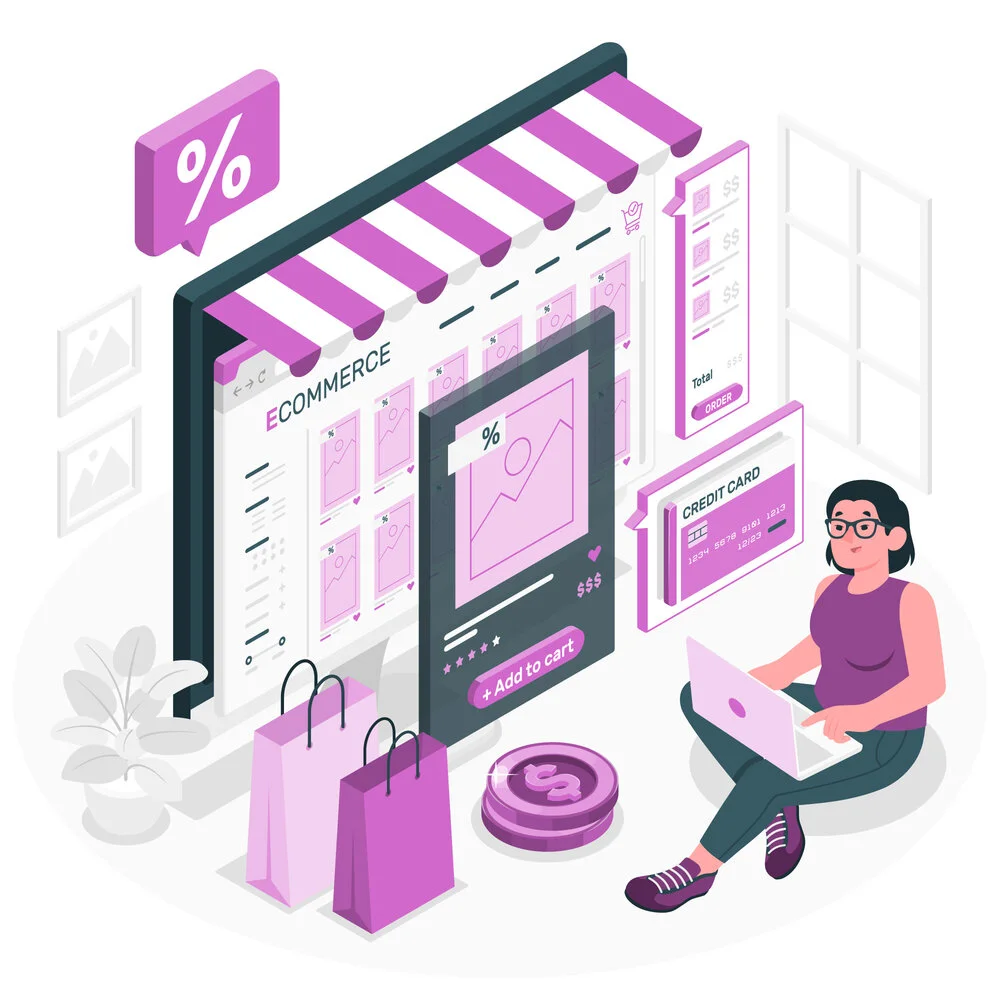
Just like any other business, opening an online store can be a complicated process, but creating, launching, and managing a site where entrepreneurs, designers, and creators of all kinds can sell their products is more accessible now than ever.
Online businesses, diverse types of businesses that sell goods or services online, vary in size and scope, from cars for sale or home appliances to decorative products or food. From any perspective, online shopping is one of the areas that has experienced generous expansion in the last two years, and that is due to the fact that potential customers now spend a large part of their time online.
Depending on your goals, you have every reason to start an online business right now. After all, online stores offer greater flexibility, accessibility, and opportunities for many entrepreneurs. So, are you ready to open your first store?
We will provide you with all the information and tell you step by step how to launch your first online business in the shortest time possible.
Your guide to a successful online business
1. Think about the type of business and choose the right niche
You should have an idea of the type of business you will run, so start researching the market. Find out who your competitors are and how they run that business: how they reach customers, what you like about their communication, or what you would change.
Think of as many business ideas and possibilities as possible and find the differentiator, because e-commerce has grown so rapidly that you will face fierce competition.
Will you sell products or services? If you sell products, are they physical or digital? Where will you source the products? In this regard, you will also need to think about the type of business model you want to pursue, will you offer individual products, packages, subscriptions, or something else?
Although the expansion of online commerce represents a great advantage for those who want to learn how to start an online business, it also means more competition. That is why it is important to research the competition and find an area where you can make your brand known and succeed in selling products and services.
2. What types of products do you want to sell?
Now that you have an idea for your business, you need to figure out if you can put it into practice. In other words, you need to see if your business will be viable.
To validate the success of selling your products/services, you can use several criteria that can be divided into two main categories: market based and product based.
Market based criteria
These are the market factors that will influence your product and business model. Thus, you will analyze:
- Market size and demand for your product/service
- Who your competitors are
- Is this a trend, a growing market, or a flat market
- Who your target customers are
Product based criteria
Once you have an idea of the market direction and who you are targeting, you can move on to the next set of criteria. So, consider the following aspects:
- Potential selling price
- Potential markup (the price difference between the cost of producing a good or service and its selling price)
- How many types of products will you have
- If you will offer a subscription
- The size, weight, and durability of your product, if you are selling something physical
- The existence of seasonal buying fluctuations
- Whether your product or service solves a problem or serves a passion/hobby
- Whether your product is consumable, disposable, or perishable
- If there are regulations or restrictions around the commercialized product
All these criteria can give you an overview of the potential of the product or service and help you avoid common mistakes in the field where your business is located. If, after examining all these factors, you have determined that there is enough market for your product, it means that you can calmly move on to the next steps for launching your online business.
3. Who is your audience?
As you gather information about the products you sell, do not forget to find out who will be the target audience that will buy those products. Who is your ideal customer? What characteristics do they have? To find out this information, creating buyer persona profiles would be an important step.
Profiles are fictional versions of your ideal customers that allow you to try and predict how they will behave. With the help of these profiles, you will be able to understand who your customer is, what their behavior is, and how you can convince them to choose your product.
Start with a few simple questions:
- How old is this person?
- Where do they live?
- What is their income?
- What needs do they have?
- What type of product could help them?
From here, you will be able to deduce what online platforms they use and what types of messages they are likely to respond to. This information will help you present and market your product efficiently from the beginning of your online business launch.
4. Find the best name
Finding a suitable name for your online business is one of the most challenging aspects at the beginning. You will have to come up with something that attracts attention, describes your brand and products, and of course, is not already used by someone else.
The brand name plays an important role in the development of your business and its branding, because it is the element that will set the tone of communication, the aesthetic of the store, and the type of consumer who will be attracted to your business/store.
When it comes to choosing a name, remember to:
- Keep it simple, use simple, short, and to the point words
- You differentiate yourself from others
- Be creative
- Be original
If you're out of ideas, you can use an automatic name generator that can offer you attractive name ideas to start from or even to choose.
Once you have chosen a name and made sure it is not already used by another company, you will need to register a web domain for your online activity. The domain is the digital address of the store, which includes the brand name and the desired extension, for example mybusiness.ro/.com/.shop.
5. Structure your website
Website architecture represents the basic structure of the online store, and how it looks is very important.
If, in the case of a physical store, the biggest challenge is attracting customers to the store, with an online store the truly difficult part is making customers stay on the site, browse more products, and ultimately make a purchase. Thus, you need a simple, clean design and a clear, easy-to-follow structure, without the user having to click many times to find the desired product/service.
Remember that simplicity is key; potential customers will respond well to an approach that does not overload pages with dozens of details. If a user does not quickly find the product they need, with a single click they will leave their site and go to the competition.
Generally, a site is divided into pages and categories. Below is the basic structure of a site:
- Home page, first impressions matter;
- About Us, offers the user some information about your brand and business;
- Products/Services, these are the pages that will contain the most important information for your customers. Do not ignore them and add representative photos and comprehensive descriptions for each product/service to provide the potential buyer with all the information they need to make the purchase.
- Blog, this is the section through which you can organically attract users to your online store, for this you need an SEO optimized content strategy.
- Contact, offer the user as many ways as possible to contact you for additional information;
- Footer.
The footer is the bottom section that provides the user with access to a series of important documents, required by law, such as:
- Return policy
- Privacy policy and GDPR
- Cookie policy
- Website terms and conditions of use
- Social media communication channels, currently these represent an important part of your online presence
- Newsletter form/button, if you plan to use email marketing.
What to pay attention to?
Among the above, the most important thing is to pay increased attention to product pages and include all the information users need, prices with or without VAT, product features, image gallery, warranty period, delivery details, stock information. You can offer customers the possibility to leave a product review, because they are appreciated by users.
Also, don't forget the most important elements that define an online store, namely:
- Checkout page;
- Shopping cart, the customer has all the selected products in the cart, with prices and quantities;
- Billing details, choose between individual or legal entity and fill out the form;
- Delivery address;
- Delivery options, each with its cost.
See, for example, what mistakes not to make regarding the online store's checkout page.
6. Promote your online business
And... we've reached the end! Now that your products/services are just a click away and your site is functioning properly, you're ready to "receive" your first customers. And to do this, of course, you'll need to promote your first online business through different marketing strategies.
Whether you choose Google Ads promotion, Facebook Ads, through Social Media channels, or classic promotion through recommendations, take advantage of all online marketing tools and discover which ones work best for your type of business.
As your online business develops, you can monitor, analyze, and change your marketing strategy to find the "recipe" that works best for your online business.
If this guide has not answered all your questions, do not hesitate to contact us! We are here to guide your steps in digital, and beyond, offering you all the information you need, whether you are just starting out or want a new perspective on your business.
Are you ready for your first online business?
Good luck and happy conversions!