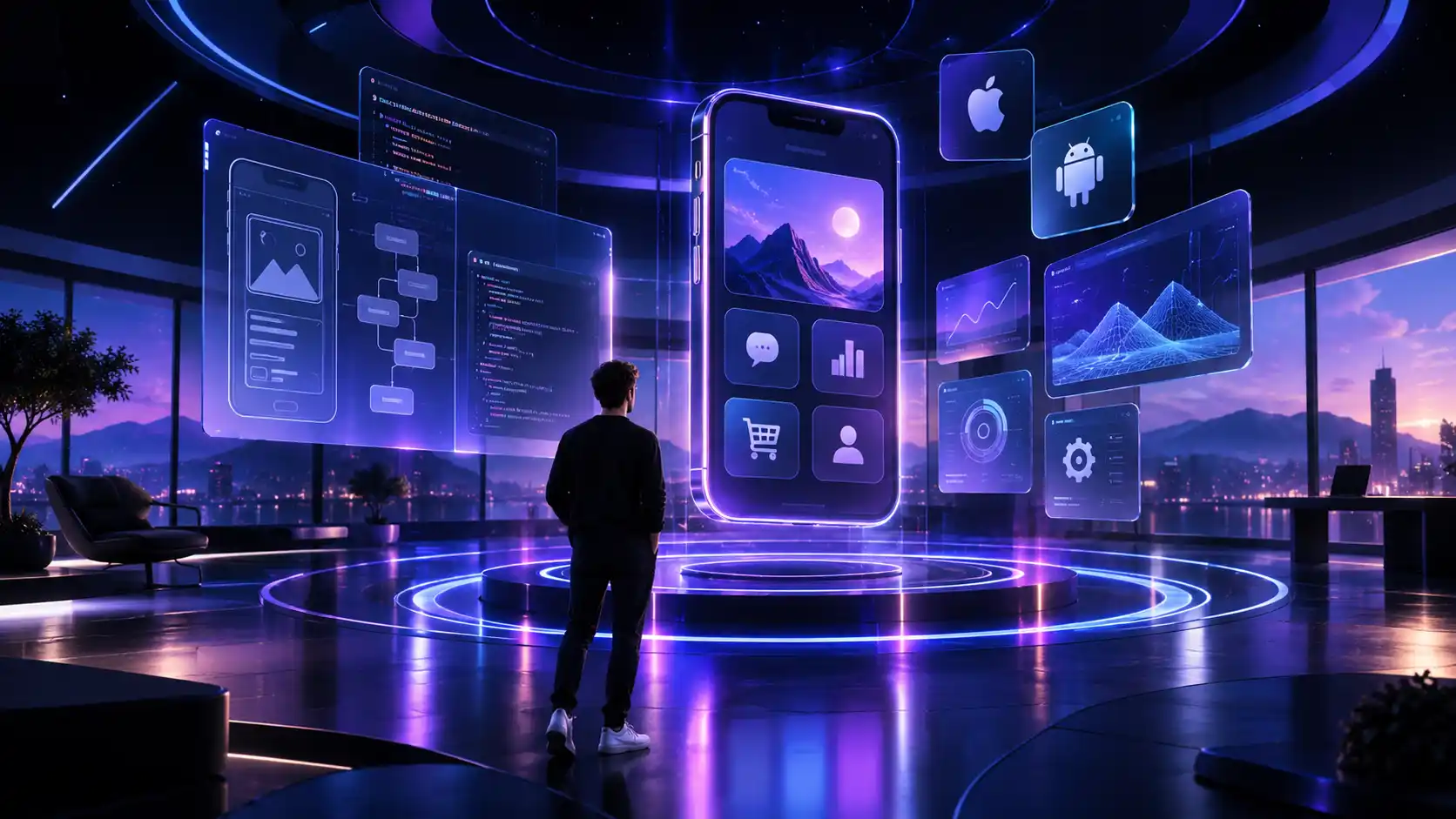
A brand's presence is scattered today across dozens of channels, from the classic website and mobile application, to in-store screens, smartwatches, and voice assistants, content management has become a nightmare-level Tetris. How do you ensure your message is consistent, adapted, and efficiently delivered everywhere, without going crazy?
The answer that is booming louder and louder in the industry is Headless CMS. If the term sounds like it's straight out of a sci-fi movie, don't worry. Let's analyze it and see what's actually under the hood and why it could be a game-changer for your business in Romania.
What is a Headless CMS and how does it differ from a traditional CMS?
Simply put, a Headless CMS is a content management system that has been guillotined and had its "head" cut off. To better understand, imagine a traditional CMS (monolithic), like a classic WordPress, as a Dacia 1310. The engine, the body, the seats, everything is one package. Want to change the engine? Good luck, you probably have to cut half the car.
It's the same here: the "body" (the backend, where you input content and manage everything) is welded to the "head" (the frontend, meaning what people see on the site: the theme, the design). Content, code, design, all bundled together, in a single black box, sometimes difficult to move.
A Headless CMS, on the other hand, is like a Tesla engine. A core of power that you can put on any chassis you want: a roadster, an SUV, an electric scooter, whatever your heart desires.
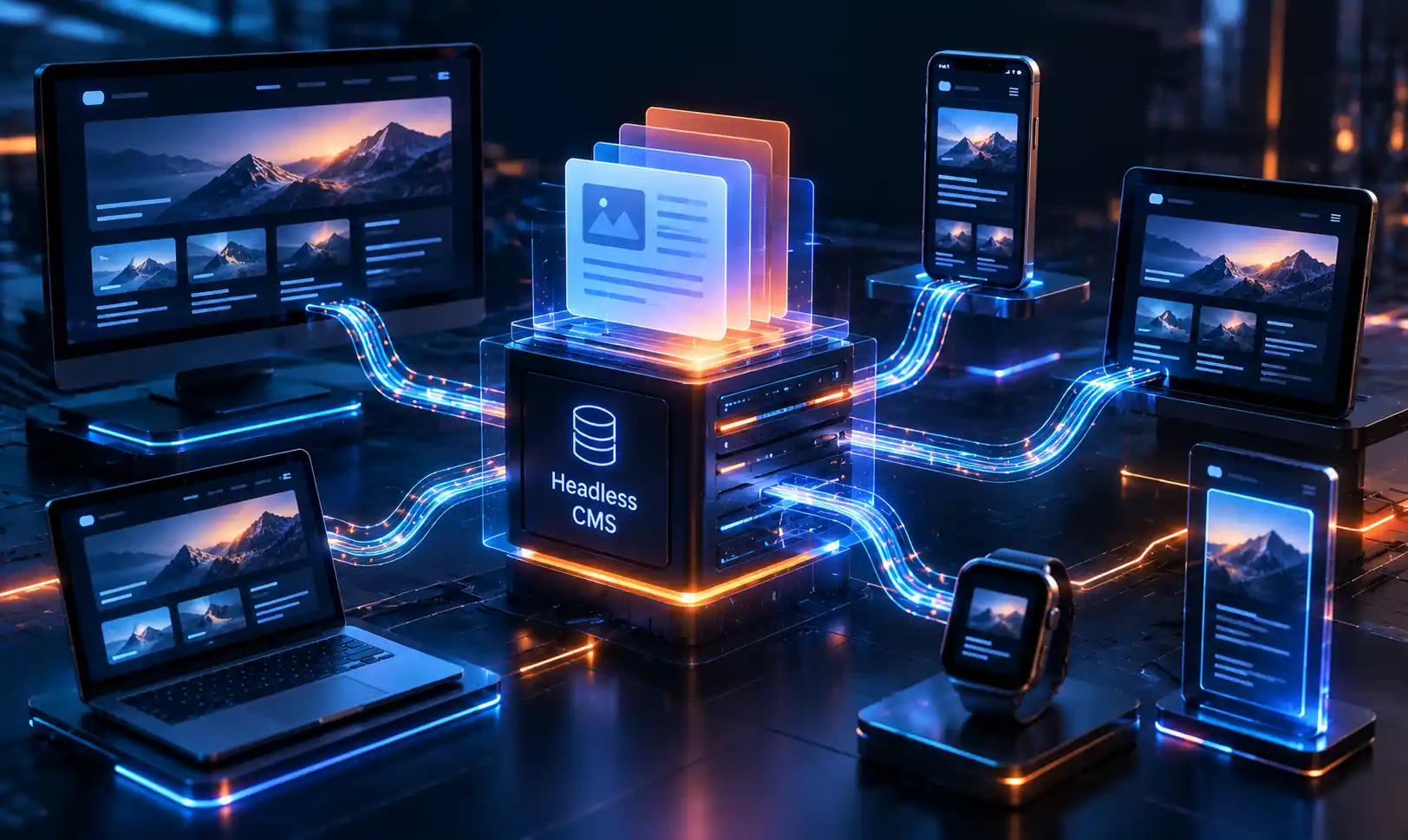
He is just a "brain," an intelligent content repository, who doesn't care for a second how or where that content will be displayed. He merely stores the information and exposes it through an API (an application programming interface, a kind of super-efficient digital waiter).
Developers can then "shout" for content through this API and serve it on any platform or device they desire, using the coolest frontend technologies (React, Vue, Angular, Svelte, etc.). Basically, you have a single place where you manage everything and absolute freedom to present it to the world.
The "one content, multiple platforms" paradigm
And this is where the magic begins. Decoupling the backend from the frontend gives rise to the "one content, multiple platforms" principle (or, as marketers call it, "Create Once, Publish Everywhere"). Think about it: you write a blog post, add a product description, or publish a special offer just once in the Headless CMS.
Then, the same content can be automatically distributed and natively displayed on:
- The company's website (built with Next.js for speed);
- The mobile app for iOS and Android (built in React Native);
- A digital display in a physical store;
- An interactive kiosk or a POS terminal;
- Social media platforms (through custom integrations);
- Voice assistants like Alexa or Google Assistant (which receive a special script);
- And, why not, on the screen of your smart refrigerator.
This approach not only streamlines the marketing team's work to the sky, but also ensures exceptional brand consistency across all channels. A solid content strategy becomes much easier to implement and scale when you don't have to manually copy and paste information into ten different systems, each with its own quirks.
Benefits of Headless CMS for Romanian Businesses
Alright, and what's in it for me, as a business in Romania? Let's leave the theory aside. The advantages translate directly into speed, flexibility, and, at the end of the day, more money in the bank. Here are the main benefits of Headless CMS:
- Flexibility and development speed: Developers love Headless CMSs. Why? Because they are freed from the “prison” of themes and plugins of a traditional CMS. They can use the most modern and performant frontend technologies (Jamstack, for example) to build unique and ultra-fast digital experiences. The web development process becomes more agile, allowing for faster launch of new functionalities and campaigns.
- Superior scalability: The decoupled architecture is, by its nature, much more robust. The frontend can consist of static files hosted on global content delivery networks (CDNs), meaning your site or app can handle massive traffic peaks (such as during Black Friday) without “crashing” and without costing you a fortune. Scalability is by default, not a painful and expensive improvisation.
- Improved security: Since the backend (the content database) is not directly exposed to the public, the attack surface is dramatically reduced. Say goodbye to sleepless nights because of vulnerable WordPress plugins or themes that can be exploited. Content access is only through secure APIs, making hackers' lives much harder.
- Marketing efficiency and future-proofing: As we've seen, you manage content once for all channels. That means pure efficiency. Moreover, you are prepared for the future. Tomorrow a new, sci-fi channel appears, like display on contact lenses or content rendered directly by the smart fridge? No problem. You don't rebuild everything from scratch. You simply slap a new “head” (frontend) onto it that connects to the same brain (backend). You are future-proof by design. These are just some of the many advantages of headless CMS.
Content optimization for various digital platforms
A Headless CMS doesn't just mean throwing the same content everywhere. That would be a beginner's mistake. Modern systems allow content to be structured into modular, atomic pieces (components).
For example, for a product, you can have separate fields for: name, short description (for push notifications in the app), long and detailed description (for the web page), technical specifications (for a comparative product sheet), images in various formats (16:9 for web, square for social media) and an audio script for the voice assistant.
This level of granularity allows for surgical content optimization for each of those digital platforms, ensuring that the user experience is perfectly adapted to the context, all managed from a single centralized dashboard.
Choosing and Implementing a Headless CMS: A Practical Guide
Okay, you're convinced. You also want a Tesla engine. Now, how do you make the transition? The process of choosing a Headless CMS depends on your team's needs, budget, and technical level. There are two main categories:
- SaaS (Software-as-a-Service): Platforms like Contentful, Sanity, or Storyblok. You pay a monthly subscription (which can range from zero to thousands of euros), and they handle everything: hosting, maintenance, updates, security. It's the fastest and most hassle-free solution to get started.
- Open-Source (Self-Hosted): Solutions like Strapi, Directus, or Payload. You download the free software and install it on your own server (or in the cloud). You have total control and zero licensing costs, but you are 100% responsible for hosting, security, and maintenance. Comparisons such as strapi directus are essential here, as each has its own peculiarities. For large-scale projects, such as a strapi e commerce, the control offered by a self-hosted solution can be a major strategic advantage.
Regardless of the choice, implementation is not a project you check off on a Sunday afternoon. It requires careful planning of the information architecture (content modeling) and a skilled team of developers to build the frontend from scratch.
Collaborating with an agency specialized in custom web development, which understands both the technical side and business strategy, can make the difference between a successful project and a costly failure.
Cost and ROI Considerations in the Romanian Context
OK, let's talk about what hurts the most: money. Yes, a Headless project might seem more expensive initially. Besides the potential Headless CMS cost (SaaS subscription or server costs for self-hosted), you have the development costs for the frontend, which are separate and by no means negligible. However, the Headless CMS ROI analysis must be done in the long term, not after the first invoice.
Here's where the real gains come from:
- Performance = Conversions: A faster website (better Core Web Vitals scores) means a better user experience, a lower bounce rate, and, ultimately, a higher conversion rate. Google loves speed, so your SEO will also benefit.
- Agility and Time-to-Market: Do you want to launch a landing page for a new campaign? Or expand to a new market with an application? With the decoupled architecture, you can launch new "heads" much faster, without touching the backend.
- Reduced maintenance costs: Fewer plugins mean fewer updates, fewer conflicts, and fewer security vulnerabilities. The time saved by developers translates into money.
- Operational efficiency: The time saved by the marketing team through centralized content management is a huge opportunity cost.
For the Romanian market, where digital competition is fierce, this speed and flexibility can constitute a decisive competitive advantage, which amortizes the initial investment faster than you might think.
When should you NOT choose a Headless CMS?
Let's be honest, a Headless CMS is not a universal panacea. There are situations where a traditional CMS, such as WordPress, is not only sufficient but even more advisable. We recommend caution in the following scenarios:
- Simple and low-budget projects: For a simple presentation website, a personal blog, or a local business that only needs an online "business card", a Headless CMS can be overkill. The initial costs of developing a custom frontend can outweigh the benefits. A well-chosen and configured WordPress theme can be ready in a few days, at a fraction of the price.
- Non-technical teams dependent on WYSIWYG: If your marketing team is accustomed to visually building pages with drag-and-drop, using page builders like Elementor or Divi, the transition to Headless can be a cultural shock. Most Headless CMSs offer a text editor, but not a live preview of the final page in the design context. While solutions exist (preview deployments), the experience is fundamentally different and requires training.
- Need for maximum speed to launch (Time-to-Market): When you need to launch a functional site yesterday and do not have dedicated frontend development resources, a traditional CMS wins hands down. The immense ecosystem of plugins and pre-made themes allows you to have a functional site almost instantly.
The correct choice depends on an honest analysis of needs, resources, and long-term objectives. A Headless architecture is an investment in future flexibility and performance, but it must make sense in your current context.
Common mistakes when migrating to Headless
The transition to Headless is a marathon, not a sprint. Initial enthusiasm can lead to hasty decisions and costly mistakes.
Here are some pitfalls I've frequently seen that you should avoid:
- Superficial content planning: The biggest mistake is to jump straight to code. Without a solid content model, you will end up building a system as rigid as the old one. Think of content as Lego pieces: how can they be defined (title, image, text, CTA) to be recombined in dozens of different ways across various platforms?
- "Page-oriented" thinking: Another pitfall is to replicate the old site's structure 1:1. Headless forces you to think "component-oriented". You don't create a "contact page", but rather reusable components like "contact form", "interactive map", "address list", which you can then assemble into a contact page, but also use in other contexts.
- Ignoring Editorial Experience (EX): Developers might be happy with their new tech stack, but if the marketing team struggles to publish an article, the project has failed. The backend needs to be intuitive, with clear field names, helper texts, and, ideally, preview functionalities that allow editors to see how the content will look before publishing.
- Choosing technology "for the sake of the CV": Just because a JavaScript framework is trendy on Twitter doesn't mean it's the best choice for your project. Analyze the learning curve for your team, the surrounding ecosystem, and the specific requirements of the project before diving headfirst.
Migration from Traditional CMS to Headless CMS
The CMS migration process from a platform like WordPress to a Headless CMS must be surgically planned. The first step is a content audit to decide what to keep, what to discard, and what to rewrite.
Then, the new data structure (content model) is defined in the Headless CMS. Next comes the technical part, where the fun begins: writing scripts that extract content from the old traditional CMS (usually from the SQL database or via the WordPress API) and import it, via API, into the new Headless CMS. It is a complex process, especially if you have thousands of articles or products, but with a correct strategy and rigorous testing, the transition can be surprisingly smooth.
Advanced Security and Future Trends in Headless CMS
Regarding Headless CMS security, the major advantage is separation. The backend (the brain) can be hidden behind a strict firewall and a private network, accessible only through secure APIs with authentication tokens (e.g., JWT). The frontend (the facade), often a pre-generated static site (Jamstack architecture), is immune to most attacks targeting databases or server-side processing (e.g., SQL Injection, server-side XSS). It's like having the bank vault in a different building, completely separate from the public counters.
Looking ahead, trends are fascinating. We already see AI being integrated into CMS to suggest tags, generate summaries, translate content, or even create A/B testable text variants. Advanced personalization, where content adapts in real-time based on the user (based on CRM data, for example), delivered directly via API, is becoming standard.
All this evolution is part of a broader concept called "Composable Architecture," where businesses build their technology stack like a puzzle, from the best-of-breed specialized services for each need (CMS, e-commerce, search, etc.), all connected via APIs.
Adopting a Headless architecture is no longer just a technical whim for IT hipsters, but a strategic business decision. In a digital world moving faster than ever, agility and the ability to be present on multiple platforms consistently are vital for survival and growth.
With extensive experience in integrated digital strategies and top-tier web development, Danco Vision online marketing agency can help you successfully navigate this complex, but extremely profitable in the long run, transition.