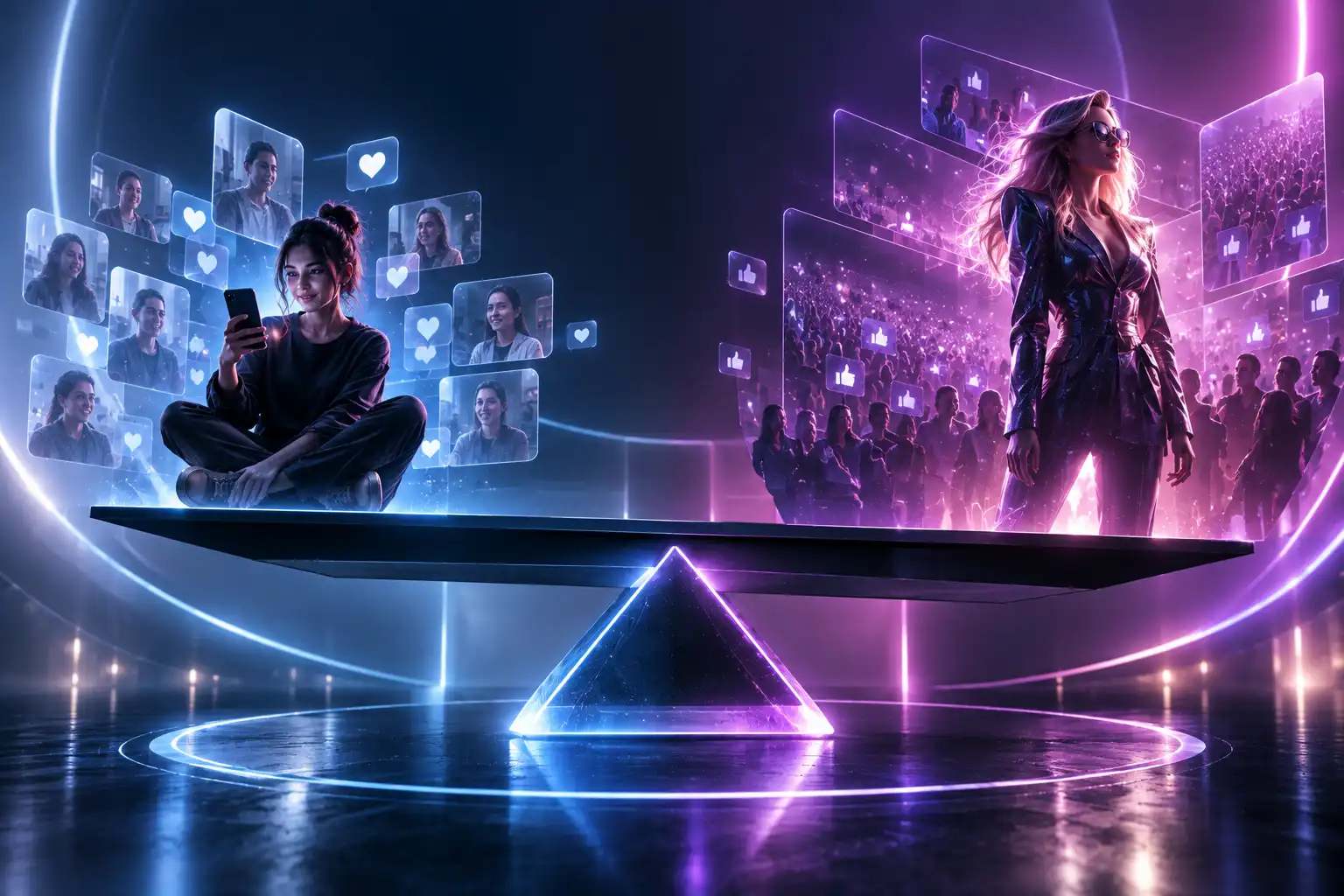
We live in a digital world suffocated by noise. The infinite scroll, constant notifications, the bombardment of information, all fighting for a fraction of the consumer's attention. Saying you have a good product is no longer enough. Writing impeccable text? Not even close.
If you want to be heard, you need to be SEEN. And not just any way, but through a story that captures, convinces and, ultimately, converts. This is where the heavy artillery of modern marketing comes in: visual storytelling.
If you still think that 'a picture is worth a thousand words', it's time for a serious update. A good image, integrated into a visual storytelling strategy, can be worth a thousand conversions. It's the difference between a brand shouting into the void and one whispering a story directly into the soul of its audience. Let's dissect this concept and see how you can turn it into the growth engine for your business.
What is visual storytelling and why does it matter?
In short, visual storytelling is the art of using visual elements, images, videos, infographics, GIFs, design, to tell a coherent and emotional story about your brand. It's not just about posting pretty pictures on Instagram. It's about building a narrative that conveys your company's values, mission, and personality without relying exclusively on text. Think of it as a movie where your brand is the main hero, and the customer is the captivated spectator.
Its impact is deeply rooted in consumer psychology. The human brain processes visual information 60,000 times faster than text. Visual stories trigger emotional responses, activate memory centers, and create a much stronger personal connection than a list of technical features. When a customer feels your brand's story, the purchasing decision becomes a natural consequence, not an effort of persuasion.
Strategic Applications of Visual Storytelling in Marketing
Visual storytelling is not an isolated tactic, but a common thread that must run through your entire marketing strategy. It's a game-changer across multiple channels, each with its own specifics. Let's look at some concrete examples:
- Your Website: The "About Us" page doesn't have to be a wall of text. Transform it into an interactive visual timeline, with behind-the-scenes photos, team videos, and video testimonials from clients. Use high-quality images and product videos on sales pages to show, not just tell, the benefits.
- Social Media: This is the main playground. Each platform has its own visual language. On Instagram, create an aesthetically coherent feed. On TikTok, use short, dynamic videos to show the brand's personality. On Facebook, combine image carousels with explanatory videos.
- Email Marketing: Instead of text-heavy emails, integrate animated GIFs to demonstrate a functionality, infographics to present complex data in a digestible way, or even short presentation videos. A visual email has a much higher click-through rate.
- Advertising (Performance Marketing): Visual ads are essential. A well-produced video ad on YouTube or Meta can have an exponentially higher ROI than a static image. Test different creative formats, from video testimonials to short animations, to see what resonates best with your audience.
Visual storytelling on social networks
Let's delve a little deeper into the social media area, because this is where the visual battle is fiercest. It's not enough to be present, you have to be memorable. On platforms like Instagram, TikTok, and YouTube, your content doesn't just compete with other brands, but also with friends' vacation photos, cat videos, and viral memes. To emerge victorious, you need a solid visual strategy.
- Instagram: Focus on aesthetics and consistency. Use Stories to show behind-the-scenes, the creative process, Q&A sessions with the team, everything that humanizes the brand. Reels are perfect for quick tutorials, "before & after" transformations, or joining a relevant trend.
- TikTok: Authenticity, humor, and speed. There's no room for corporate ads here. Think about challenges, funny sketches related to your niche, or educational content presented in an ultra-dynamic format.
- YouTube: This is the platform for broader stories. You can create video case studies, brand documentaries, interviews with industry experts, or in-depth tutorial series. Production quality matters, but a good story always beats a Hollywood budget.
Managing these platforms and creating tailored content for each can be overwhelming. That's why many top brands turn to experts to orchestrate their online presence. Investing in professional social media services translates directly into visibility, engagement, and ultimately, sales.
Tools and Techniques for Creating Compelling Visual Narratives
Okay, the theory sounds good, but how do you put it into practice? Fortunately, technology has democratized visual content creation. You don't need a production studio to start. Here are some basic tools and principles:
- Accessible tools: Platforms like Canva have revolutionized design for non-designers, offering templates for almost anything. For mobile video editing, apps like InShot or CapCut are extremely powerful and intuitive.
- Professional software: When you're ready to take it to the next level, the Adobe suite (Photoshop, Illustrator, Premiere Pro, After Effects) remains the industry standard.
- Design principles: Don't forget the basics. Learn about color theory (the psychology behind each shade), composition (rule of thirds, leading lines), and visual hierarchy (which element do you want to attract attention first). A well-composed image guides the viewer's eye exactly where you want it.
The structure of an effective visual story often follows the classic narrative arc: introduction (you present the context), conflict (the problem your product solves), and resolution (the solution and benefits offered by your brand).
Integrating Visual Storytelling with SEO and Performance Marketing
Here we separate amateurs from professionals. Exceptional visual content that is not optimized is like a Formula 1 car without fuel. For your visual stories to have a real impact on the business, they must work in synergy with SEO and performance campaigns. How exactly?
First of all, SEO is no longer just about keywords. Google loves content that keeps users on the page, and interactive videos and images do just that. The time spent on the site (dwell time) is a crucial SEO signal. Moreover, technical optimization is vital:
- Alt Text: Describe each image using relevant keywords. It helps search engines to “understand” the image and is essential for accessibility.
- File names: Do not upload images with names like IMG_8765.jpg. Rename them descriptively: visual-storytelling-strategy-danco-vision.jpg.
- Compression: Large images slow down the site, killing user experience and SEO score. Use tools like TinyPNG to optimize them.
Quality visual content is also a magnet for backlinks, original infographics are often picked up and cited by other sites. At the same time, a strong visual identity helps in a community building process, and an active community generates positive social signals, which indirectly influence ranking. Danco Vision specialists understand this synergy, integrating SEO objectives into the visual content strategy from the outset.
Measuring ROI and success stories
"Beautiful, but what's in it for me?", the question on every entrepreneur's lips. Measuring the impact of visual storytelling is essential. You are not investing in "pretty pictures", but in a marketing asset with calculable ROI. Key metrics to track vary by channel:
- On the website: Engagement rate (time on page, scroll depth), conversion rate on pages with strong visual content.
- On social media: Reach, engagement rate (likes, comments, shares, saves), watch time for videos, click-through rate (CTR) to the site.
- In paid campaigns: Cost per click (CPC), CTR, cost per acquisition (CPA) and, most importantly, Return on Ad Spend (ROAS).
A classic example from the local market is that of a small specialty coffee brand which, instead of talking about tasting notes, created a series of short videos on Instagram featuring the farmers from Colombia from whom they import the coffee. They showed the process, from picking the beans to artisanal roasting.
The emotional connection created led to a 300% increase in online sales in 6 months. This is the power of a well-told story. At Danco Vision, we strongly believe in data-driven marketing, where every visual campaign is monitored and optimized for maximum performance.
Emerging trends in visual storytelling
The visual world is constantly evolving. What works today might be outdated tomorrow. Several major trends are redefining the landscape. AI-generated content is becoming increasingly sophisticated, allowing for the creation of unique visuals at an astonishing speed. Interactive content, such as visual quizzes, surveys, or interactive maps, transforms the audience from passive spectators into active participants. Augmented Reality (AR) allows furniture brands, for example, to show customers what a sofa would look like directly in their living room. These technologies are no longer science fiction, but concrete tools to create memorable experiences and differentiate yourself from the competition.
The key to success is not to blindly adopt every new technology, but to understand which ones suit your brand's story and bring real value to your audience. A well-designed strategy, like the one developed by Danco Vision experts, can guide you through this constantly changing landscape.
Are you ready to transform the way your brand communicates? Let's create visual stories together that not only impress but also sell. Contact us for a personalized consultation and let's put your brand on the visual map of success.