The evolution of digital marketing represents the transition from unidirectional messages transmitted via email and static banners to complex, hyper-personalized ecosystems based on generative artificial intelligence. The success of a business depends on integrating digital marketing services that combine predictive data analysis with creativity adapted to new search algorithms (GEO) and immersive social platforms.
What are digital marketing services?
The term digital marketing services defines a set of strategies and tools used for promoting products or services through electronic channels. Unlike traditional marketing, it allows for precise audience segmentation, real-time measurement of results, and continuous optimization of invested budgets.
- Multichannel presence: Presence on Google, Social Media, Email, and Marketplace-type platforms.
- Measurability: Access to precise metrics such as ROAS, CPA, and conversion rate.
- Personalization: The ability to display specific messages based on the user's browsing history.
- Scalability: The possibility to quickly increase exposure once a campaign model is validated.
The Beginnings: The 90s and the Birth of the World Wide Web
The history of digital marketing truly began in 1990, when the term "digital marketing" appeared and Archie, the first search engine, was launched. Four years later, in 1994, AT&T published the first banner advertisement on HotWired.com, with an astonishing click-through rate (CTR) of 44%, an unimaginable figure for any digital marketing agency in today's competitive landscape.
This era was marked by Web 1.0, where users were passive consumers of information. Companies began to understand that an online presence was no longer a luxury, but a necessity. However, the techniques were rudimentary, based on email spam and aggressive keyword stuffing, practices that today would attract severe penalties from Google's algorithms.
The Google Revolution and the Rise of Web 2.0
The launch of Google in 1998 radically changed how consumers found information. The introduction of the PageRank algorithm forced the emergence of SEO as a technical discipline. With the turn of the millennium, the internet became interactive. The appearance of platforms like MySpace (2003), Facebook (2004), and YouTube (2005) marked the transition to Web 2.0, where user-generated content became king.
For a digital marketing agency of that period, the challenge was to learn to communicate bidirectionally. Brands began to receive real-time feedback, and online reputation became a critical asset. In this context, the foundations were laid for what we today call Social Media Marketing, transforming simple advertising into a continuous conversation between the brand and the customer.
Technological Evolution: From Desktop to Mobile First
The launch of the iPhone in 2007 was the turning point that shifted the center of gravity of marketing into the consumer's pocket. SMS marketing and responsive websites became priorities. Any Bucharest digital marketing agency that wanted to remain relevant had to adapt its strategies for small screens and much reduced attention spans.
If in 2010 we spoke of "the year of mobile," today we live in a world where over 85% of online transactions are initiated on mobile devices. This evolution forced Google to switch to "mobile-first" indexing, penalizing sites that do not offer an impeccable smartphone experience. This transition refined how we understand [How to prepare your first paid online marketing campaign?], emphasizing loading speed and the simplicity of the checkout process.
Comparison: Traditional vs. Digital Marketing
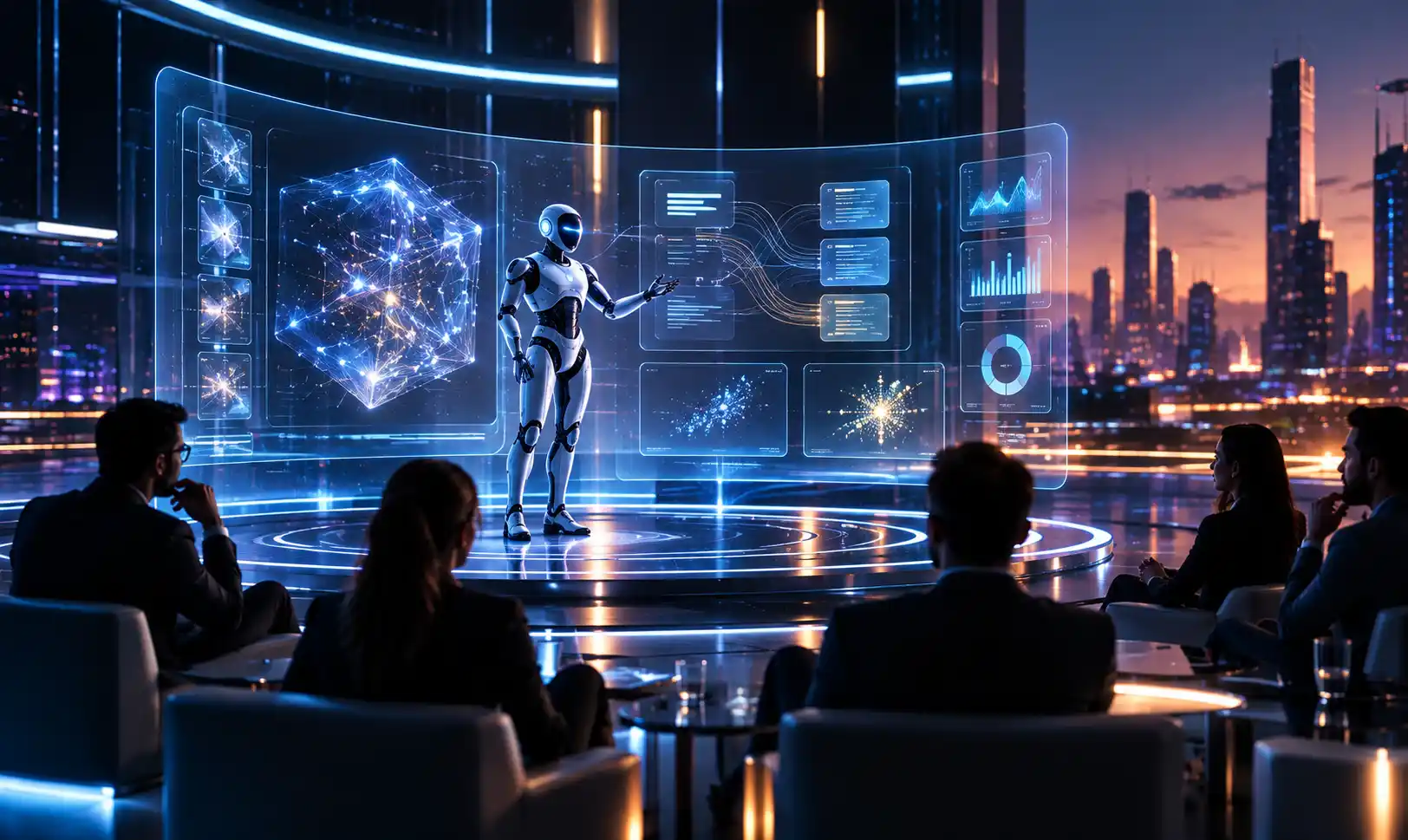
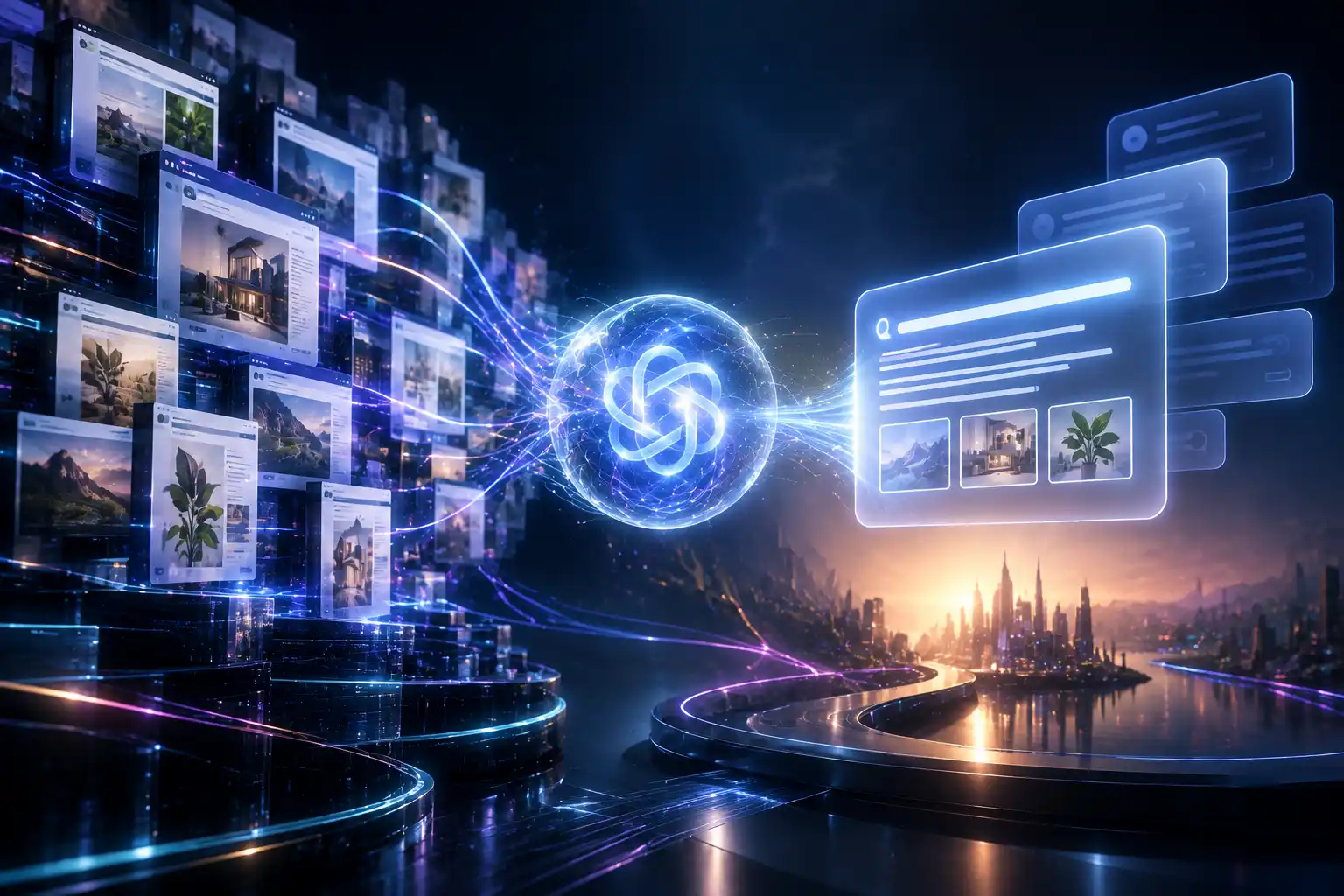
We have officially entered an era where AI is no longer just an assistant, but the main engine of growth strategies. Today, SEO has transformed into GEO (Generative Engine Optimization). We no longer optimize just for a list of links, but to be the source cited by AI assistants in their direct responses to users.
The "black box" algorithms of two years ago have been replaced with language models that understand the user's deep intent. Programmatic advertising has reached a level of efficiency where ads are dynamically generated within the milliseconds a page loads, adapting the visual and text precisely to the psychological profile of the person looking at the screen.
Digital marketing is no longer about who has the biggest budget, but about who owns the cleanest data and knows how to use it to create authentic human experiences with the help of AI. Technology is just the bridge, empathy remains the destination. - Daniel Ionescu, Founder Danco Vision
Impact of Generations: Strategies for Gen Z and Alpha
The way we consume information has been redefined by Gen Z. This generation has abandoned classic search engines in favor of TikTok and Instagram for product discovery. A modern digital marketing agency must create short, authentic, and "lo-fi" video content that doesn't look like an advertisement. More details about this phenomenon can be found in [Digital Marketing for Gen Z: A guide to best practices].
For present-day marketing, this means a shift from massive branding campaigns to micro-influencers and niche communities. Brand values, such as sustainability and transparency, have become performance indicators as important as price or product quality. If a business does not reflect these values in its digital communication, no amount invested in ads will generate long-term loyalty.
How to choose correctly: 5 questions to ask an agency
The market is saturated with offers, but not all agencies have kept pace with technological changes in the last two years. Here's what you should ask before signing a contract for digital marketing services:
- How do you integrate generative AI into the creative and optimization process without sacrificing originality?
- What is your strategy for GEO (Generative Engine Optimization) in the context of new search interfaces?
- How do you manage First-Party data in the context of the total elimination of third-party cookies?
- Can you demonstrate a history of positive ROAS for clients in my niche over the last year?
- How do you measure the real impact of awareness campaigns on offline or assisted sales?
The Future of Digital Marketing: Web 3.0 and the Metaverse
Although the initial enthusiasm for the Metaverse has cooled, augmented reality (AR) technologies have deeply integrated into e-commerce. Currently, users "try on" furniture in their living room or virtual clothes before buying, using smart glasses or advanced mobile devices. Digital marketing has become spatial.
Web 3.0 also brings a change in data ownership. Consumers now have full control over their information through digital wallets, and brands must offer real value in exchange for permission to send advertising messages. Tokenization of loyalty (utility NFTs) has replaced old points cards, offering exclusive access to events or limited-edition products.
Why collaborate with a Bucharest digital marketing agency?
Although marketing tools are accessible to everyone, the complexity of the ecosystem makes in-house management at a professional level almost impossible. A digital marketing agency like Danco Vision brings multidisciplinary expertise: from data scientists who train bidding models, to creatives who understand the psychology of new generations.
Our services are designed to cover the entire sales funnel, ensuring consistency between the message on Google Search and the experience on TikTok or in the mobile application. In a globalized market, local expertise combined with cutting-edge technology represents the only sustainable way to gain a relevant market share.
Final recommendations for success
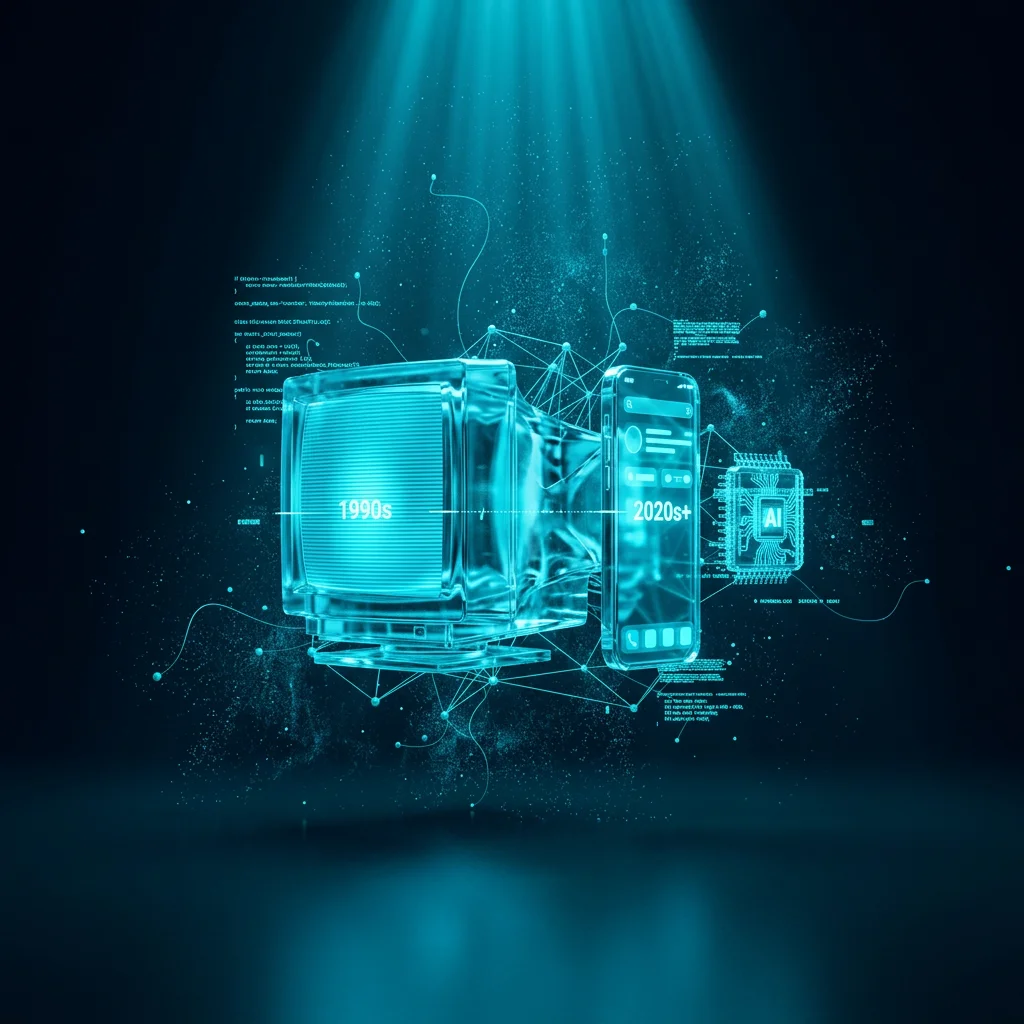
The history of digital marketing has taught us that the only constant is change. From the first banners in the 90s to the complexity of AI today, the companies that have prospered were those that adopted technology early, without forgetting fundamental human needs. The key to success lies in the balance between extreme automation and authentic personalization.
To successfully navigate this ecosystem, it is vital to collaborate with specialists who not only monitor trends but also anticipate them. Danco Vision remains at the forefront of digital innovation, offering integrated solutions that transform online visibility into tangible business results. Regardless of whether you are just starting out or want to scale a mature business, your digital strategy must be agile, data-driven, and future-oriented.