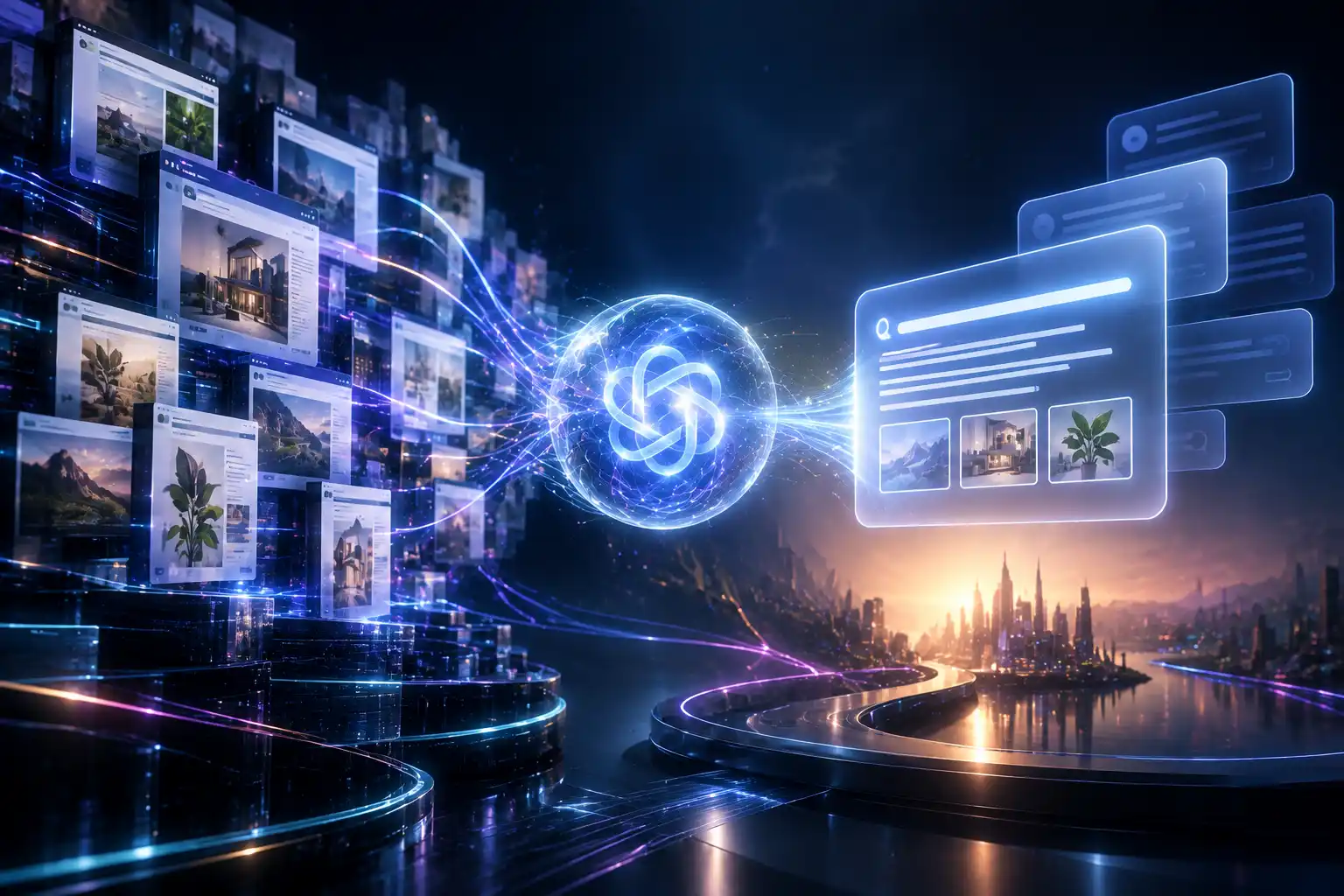
Artificial intelligence has redefined the way we search for information online. If in the past Google was the obvious choice for almost any question, today we have alternatives like ChatGPT, which offers quick, personalized, and conversational answers. With options such as ChatGPT Plus, users can also access more advanced AI capabilities for research, analysis, content creation, and other complex tasks.
But which one is more suitable for your needs? The answer depends on the type of search, the information you need, and your final goal. While Google helps you explore sources and discover information across the web, ChatGPT can interpret questions and provide structured answers within a conversational experience. In this article, we analyze the key differences between Google and ChatGPT and offer clear recommendations on when to use each one.
When is Google more useful?
Google remains the absolute leader in terms of search volume, offering access to billions of web pages and real-time updates. It is the ideal choice for:
1. Factual searches and multiple sources
If you want to compare opinions, verify sources, or discover more perspectives on a topic, Google offers you a varied list of links. You can evaluate the credibility of each source, see the publication date, and access specialized content.
Example:
- "What are the latest news about labor legislation in Romania?"
- "Top 10 vegan restaurants in Bucharest in 2025"
2. Shopping and review-based decisions
Google integrates commercial results, reviews, prices, and advanced product filters. If you want to compare laptops, find discounts, or read opinions from other users, the search engine provides exactly what you need.
3. Navigation and localization
For searches involving a location, restaurants, services, addresses, Google Maps and Knowledge Panels are essential tools. ChatGPT cannot offer the same level of geographical accuracy or real-time updated data.
When is ChatGPT more useful?
ChatGPT excels in natural conversations, quick information synthesis, and context-adapted responses. The growing connection between AIO and ChatGPT also highlights how AI-powered platforms are changing the way users discover, interpret, and interact with online information. It is a powerful tool especially for:
1. Complex explanations and educational content
Do you want to understand abstract concepts, have an idea explained step by step, or receive personalized examples? ChatGPT is ideal for this type of interaction. It can rewrite, simplify, or adapt explanations based on your knowledge level.
Example:
- "Explain the difference between machine learning and deep learning models."
- "Summarize the theory of natural selection in language accessible to middle school students."
2. Content generation
If you need texts, blog ideas, headlines, or even code, ChatGPT can quickly deliver solutions. It is not a substitute for a professional copywriter, but it is an excellent starting point.
3. Quick answers without ads
For questions like "what is the capital of Norway?" or "how many calories does a banana have?", ChatGPT offers direct answers, without sending you to other websites or cluttering your screen with ads.
How does this duality influence SEO strategies?
Companies and content creators no longer have to focus only on ranking in Google. With the integration of AI into search engines and the rise of conversational tools, a new direction has emerged: optimization for AI-generated answers. This is where the increasingly close connection between SEO and AI comes in, forcing specialists to create content that is not only relevant but also structured in a way that is easy for AI models to understand.
Content must be clear, logical, well organized, and answer direct questions. In addition, integrating data schemas, microformats, and authority references helps models identify credible sources for generating answers.
ChatGPT or Google? It depends on what you want to find out
Although many wonder if ChatGPT will ever replace Google, the reality is that the two tools complement each other, they do not exclude each other. The ideal choice depends on the purpose of the search:
In the current context, it is essential for digital marketing specialists to understand not only how Google's algorithms work, but also how language models, such as ChatGPT, are beginning to influence user behavior. Furthermore, the concept of Google AI mode is becoming increasingly relevant: we are no longer just talking about a search engine, but about an AI ecosystem that understands context, intent, and personalizes results.
Conclusion
The future is not about “Google vs ChatGPT”, but about understanding how to use them together. From research and information discovery to writing and analysis, both tools can help marketers and entrepreneurs save time, work more efficiently, and make better-informed decisions.
As AI becomes increasingly integrated into search, businesses also need to adapt the way they approach online visibility. Working with an agency that offers AI optimization services can help brands combine traditional SEO with strategies designed for emerging AI-powered search experiences, ensuring they remain visible and relevant as search behavior evolves.