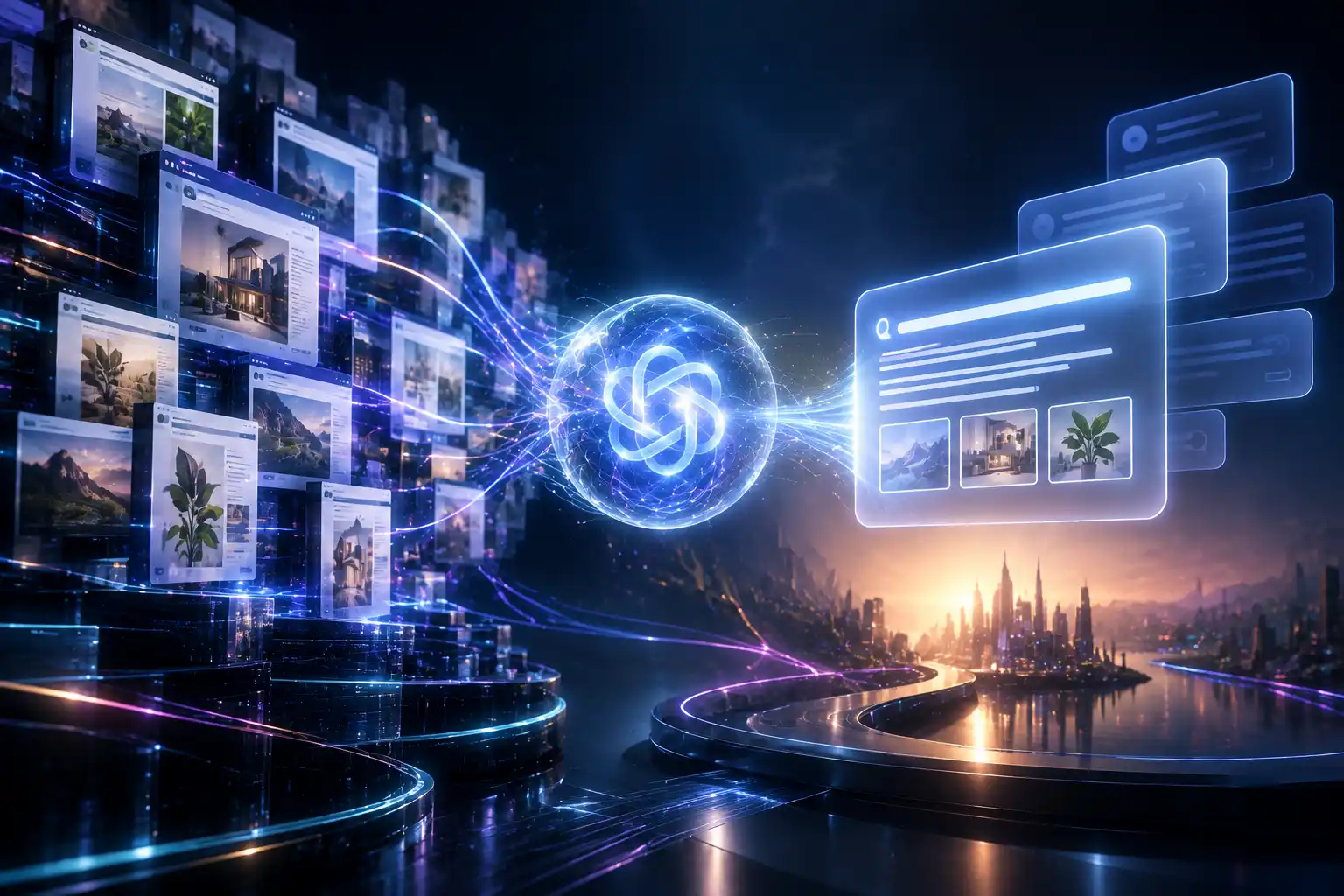
Artificial intelligence (AI) redefines the way AI content is created on social media platforms. From texts and images to automatically generated videos, we are witnessing a profound transformation in the content creation process.
Thus, AI content becomes an essential tool in any social media strategy, offering brands the opportunity to deliver more personalized, relevant, and effective messages to their audience.
The Role of AI in Social Media Content Creation
Artificial intelligence in marketing has revolutionized the content creation process, allowing brands and creators to generate materials in record time. AI-powered platforms can produce content in the form of images, videos, descriptions, or posts automatically adapted for different social networks. This translates into significant savings in time and resources, especially for marketing teams that manage large volumes of posts daily.
By using advanced algorithms, AI can analyze target audience data and create personalized, relevant, and optimized AI content for engagement. For example, a brand can use AI tools to generate a series of posts tailored to the interests of each audience segment, thereby increasing the chances of interaction and loyalty.
Another major advantage of AI content is scalability. Instead of individually creating each piece of material, brands can automate entire production processes while maintaining quality. However, it is important that this content be used strategically, maintaining a balance between efficiency and authenticity. AI content should not replace the human voice, but support it!
Advantages of Using AI Content in Social Media Strategies
AI content offers a series of essential benefits for brands that want to remain competitive in today's digital landscape.
An important advantage lies in the ability to create personalized messages at scale. With the help of AI, companies can generate content adapted to each type of audience, using data such as online behavior, consumer preferences, or previous interactions. This results in more relevant AI content that captures attention and drives engagement.
Another important benefit is execution speed. AI tools can quickly produce visual or textual materials, reducing reaction time in marketing campaigns and facilitating constant publishing. In addition, AI can analyze post performance and automatically adjust future AI content, contributing to the continuous optimization of results.
By integrating AI content into a social media strategy, brands can achieve better message consistency, greater reach, and increased efficiency in campaigns. At the same time, AI content allows for rapid testing of different formats and styles, offering flexibility and innovation in digital communication.
Challenges and Ethical Considerations in Using AI for Content Creation
Although AI content brings multiple benefits, its use also raises important challenges, especially regarding authenticity and ethics.
One of the biggest concerns is the loss of the human voice in communication. When brands rely exclusively on AI content, there is a risk that messages become impersonal, lacking empathy or uniqueness, essential aspects in building an authentic relationship with the public.
Transparency is another challenge. The public should know when a text, image, or video is generated by AI. Lack of transparency can affect consumer trust and brand credibility.
There are also risks related to misinformation or the reproduction of stereotypes, as AI systems learn from historical data, which may include biases.
Furthermore, even if AI content is technically effective, it is important that the final decision remains human. Editorial supervision is essential to maintain the quality and ethics of distributed materials. Therefore, AI content must be integrated with discernment, as a complementary tool, not as a substitute for human creativity and judgment.
Implementing AI in the Social Media Strategy
The effective integration of AI content into a social media strategy requires a planned approach tailored to the needs of each brand.
The first step is choosing the right tools, platforms such as ChatGPT, Canva AI, or Lumen5 can automatically generate texts, images, and videos, optimized for various social networks. These solutions allow marketing teams to experiment with different AI content formats, without requiring advanced technical knowledge. A solid strategy also involves clearly defining objectives: what type of AI content is desired to be created, for what audience, and on what platforms it will be distributed.
It is also essential to establish a balance between automatically generated content and content created by human creators, to maintain authenticity and connection with the audience.
Performance monitoring is another important element. AI content must be tested, analyzed, and adjusted based on engagement, reach, or conversions. In addition, collaboration between creative teams and data specialists is important to transform AI content into a truly strategic tool, aligned with overall digital marketing objectives.
In conclusion, artificial intelligence has radically changed how brands create and distribute AI content on social media. From increased efficiency to advanced personalization, AI content is becoming an essential ally in modern digital communication. However, success depends on a balance between technology and authenticity.